


News
Joining hands with partners at home and abroad to create long-term value and achieve a mutually beneficial future for the industry.
Send Us A Message
How to choose alumina blasting media grit size for coating prep
Choose alumina blasting media grit size by working backward from the coating’s required surface profile, then checking whether that abrasive can clean the substrate without excessive erosion or distortion. A grit that removes rust quickly may leave a profile too deep for the specified coating. A finer grade may produce a suitable texture but take too long to remove tightly adherent scale.
Start with the coating specification, the substrate, and the condition of the surface. Use those requirements to select a candidate grade, then confirm it with a controlled trial blast. Grit size alone cannot guarantee a particular result: abrasive shape, operating pressure, nozzle condition, working distance, and the condition of recycled media all influence the finished surface.
Start with the surface the coating needs
Before selecting an abrasive, establish two separate acceptance requirements: surface cleanliness and surface profile. Cleanliness describes the removal of rust, mill scale, old coating, and other specified contaminants. Profile describes the texture created by blasting. A surface can look clean while having an unsuitable profile, and a visibly rough surface can still contain contamination that compromises adhesion.
The coating manufacturer’s technical data sheet and the project specification should define the required preparation. Check the specified cleanliness standard, acceptable profile range, and inspection method. If the documents conflict or omit the profile requirement, resolve that point before committing to a production grade. Guessing from coating thickness alone can create avoidable rework.
Coating thickness still helps explain the consequences of abrasive selection. An excessively deep profile can make it difficult to achieve adequate coverage over the highest peaks, particularly with a thin coating. An insufficient profile may fail the coating system’s preparation requirements. Increasing coating thickness or applying an extra coat should not be treated as an automatic remedy for an unsuitable blasted surface.
Also check whether the coating instructions require a particular texture or impose restrictions on abrasive contamination. Two surfaces with similar measured profile heights can have different peak density and shape. Where the specification includes those characteristics, a single profile-height reading does not establish acceptance.
Read the grit designation before choosing the grade
For many commonly used numbered abrasive grades, a lower grit number indicates a coarser material and a higher number indicates a finer material. Within the same grading system, a grade labeled 36 is coarser than one labeled 80. However, a grit number is not a universal particle-size specification, and it does not directly state the profile the abrasive will produce.
Suppliers may describe material using abrasive grading standards, mesh designations, or their own size bands. Products carrying similar labels can have different particle-size distributions. Before comparing bags or quotations, ask for the grading system and sieve distribution. The coarse fraction, main working fraction, and fines content are more useful than a product name alone.
Alumina blasting media also varies in particle shape and resistance to breakdown. Brown fused alumina and white fused alumina should not be assumed to perform identically simply because their nominal grit labels match. For coating preparation, evaluate the actual blasting grade, its cleanliness, and its behavior in the equipment being used.
A practical way to select an initial candidate is to follow the direction indicated by the job:
- Heavy scale or a demanding profile requirement: consider a coarser candidate, provided the substrate can tolerate the impact and resulting texture.
- A general steel preparation job with moderate contamination: begin with a middle grade in the supplier’s blasting range and test against the specified profile.
- A relatively clean surface requiring a shallow profile: begin with a finer candidate and check whether cleaning remains efficient.
- Thin sections, soft substrates, or dimensionally sensitive parts: favor a conservative trial using finer media and controlled blasting intensity.
These are starting directions, not fixed grit-to-profile conversions. A chart that assigns one surface profile to each grit size leaves out too many operating variables to serve as a production acceptance rule. Supplier recommendations are useful for narrowing the trial, especially when they include the substrate and blasting conditions used to obtain the stated result.
Let substrate condition narrow the choice
On steel with tightly adherent mill scale, a very fine abrasive may clean slowly even when it produces an acceptable texture on exposed metal. A coarser candidate may improve removal, but the operator must inspect the profile once the scale is gone. Continuing to blast already-clean areas while removing scale elsewhere can leave an uneven result.
Where heavy deposits or thick existing coatings obstruct preparation, assess whether a separate removal step would make the final blast more controllable. Choosing an aggressively coarse grade to perform every operation in one pass can create a profile that the subsequent coating cannot accommodate. The final preparation pass must still satisfy the coating specification.
Previously blasted or corroded steel presents a different problem. Existing pits and texture remain part of the surface after cleaning. Finer media may limit additional roughening, but it cannot restore a deeply pitted surface to a smooth condition. Inspect pitted areas for retained corrosion and contamination, and use the specified measurement procedure when assessing the resulting profile.
For aluminum and other softer substrates, media selected for heavy steel preparation may remove too much base material. Thin sheet can also distort through aggressive blasting or concentrated dwell. Start conservatively, keep the nozzle moving, and inspect dimensions and appearance as well as cleanliness and profile. Any material-specific preparation instructions take priority over a general steel blasting practice.
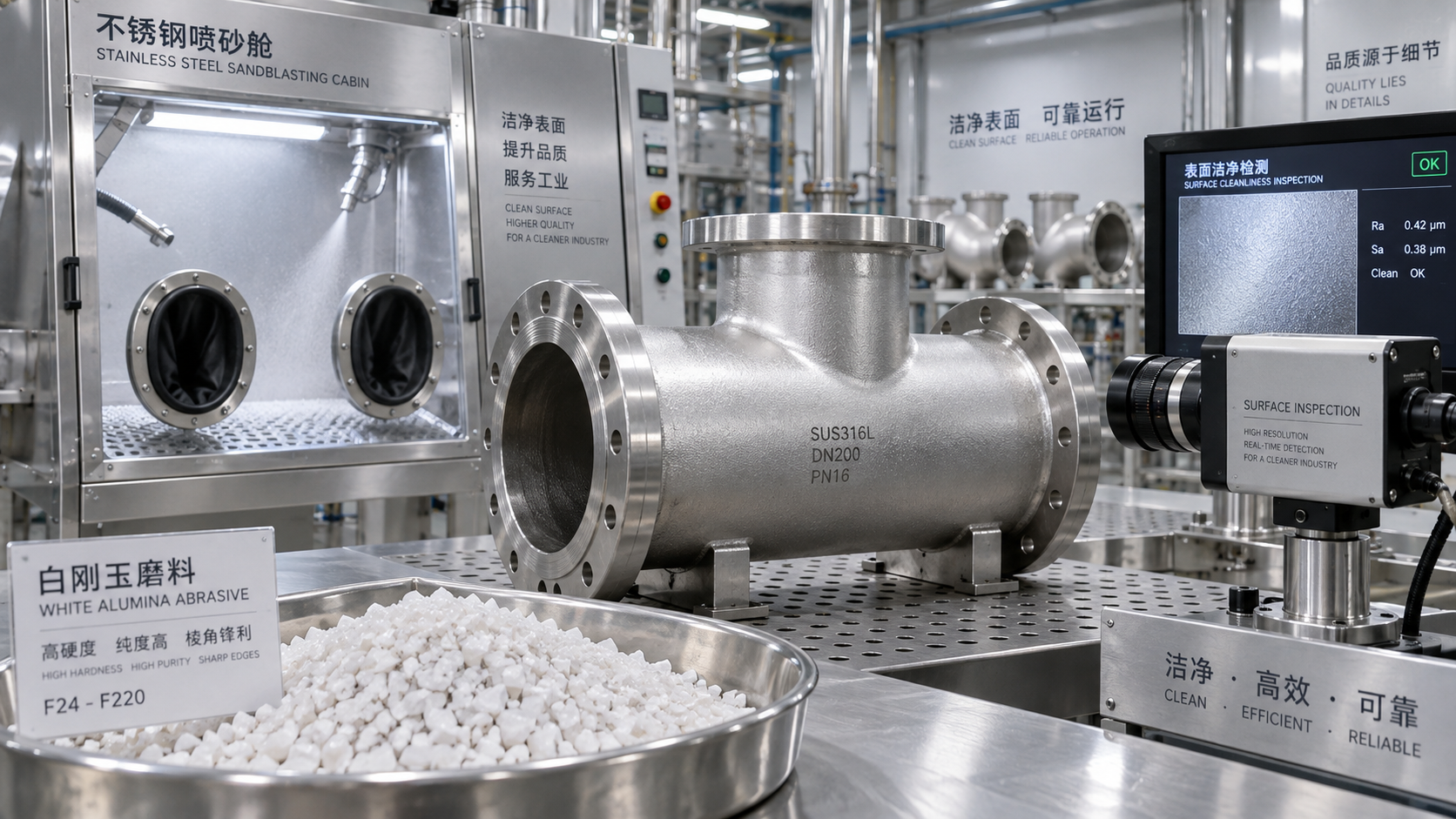
Stainless steel and contamination-sensitive components require attention to the whole blasting circuit. Clean abrasive can pick up contamination from previously processed parts, a reclaim system, or dirty handling equipment. Changing grit size does not correct that problem. Confirm that the media, equipment, and handling arrangements are suitable for the substrate and its service conditions.
Keep blasting settings controlled while comparing sizes
Abrasive size and blasting intensity work together. At comparable conditions, coarser angular particles generally tend to create a deeper, more open texture, while finer particles tend to create a shallower texture. Actual results depend on particle velocity, impact angle, substrate hardness, and abrasive condition.
In compressed-air blasting, check pressure under operating conditions. A compressor or receiver reading may not represent the pressure available at the nozzle while blasting. Hose restrictions, air demand, and nozzle wear can change cutting performance. An operator may incorrectly blame grit size when the equipment is delivering insufficient or inconsistent energy.
Media flow matters too. Excessive abrasive feed can reduce effective acceleration and waste material. Insufficient feed can slow cleaning and encourage longer dwell on individual areas. Establish a stable feed before comparing grades, and use the abrasive flow recommended for the equipment as the initial setting.
Working distance and angle should be repeatable during the trial. Moving closer, increasing pressure, and selecting coarser media at the same time makes it difficult to identify which change caused a deeper profile. Compare candidate grades with the other conditions held steady, then adjust the process deliberately if neither candidate meets the requirement.
A finer grade used at excessive intensity can still damage a sensitive surface. Conversely, reducing pressure to make an unsuitable coarse grade less aggressive may produce slow or inconsistent cleaning. The aim is a combination that gives the operator a usable margin for normal variation.
Use a trial blast to turn a candidate into a working choice
Test on the actual component where permitted, or on a representative sample with the same substrate and a comparable initial condition. A clean, flat coupon can help compare texture, but it may not reveal how the media removes scale, cleans pits, or behaves around welds and recesses.
Select one candidate and one adjacent alternative from the same grading system. Keep the nozzle, pressure, feed, angle, and distance consistent. The trial should answer three questions: does the abrasive achieve the required cleanliness, does the profile fall within the specified limits, and is the result practical to reproduce?
- Prepare the surface before blasting. Remove oil and grease using the approved method. Blasting alone is not a dependable degreasing process and can spread contamination.
- Blast a representative area. Include difficult features where relevant, such as welds, edges, pits, or partly retained coating.
- Remove loose dust. Use an approved method that does not introduce oil, moisture, or other contamination.
- Inspect cleanliness and measure profile. Use the project’s accepted inspection methods and take readings at enough locations to assess variation.
- Record the working conditions. Note the abrasive grade, media condition, operating settings, and any signs of erosion or distortion.
Use the specified profile measurement method consistently. Replica tape, stylus instruments, and surface comparators assess the surface differently; their results should not be treated as freely interchangeable. Visual appearance and touch can help identify an obvious problem, but they are insufficient for accepting a specified profile.
If the surface is clean but the profile is too deep, trial a finer grade or reduce blasting intensity while checking that cleaning remains effective. If the profile is too shallow, examine equipment performance and abrasive condition before moving to a coarser grade. If the profile is acceptable but cleaning is slow, investigate contamination, feed, and operating technique before assuming a larger particle is necessary.
Where the coating procedure requires qualification panels or adhesion testing, include those steps in the approval process. A successful trial establishes suitable preparation conditions; it does not by itself prove the coating’s long-term performance in service.
Watch what changes when the media is reused
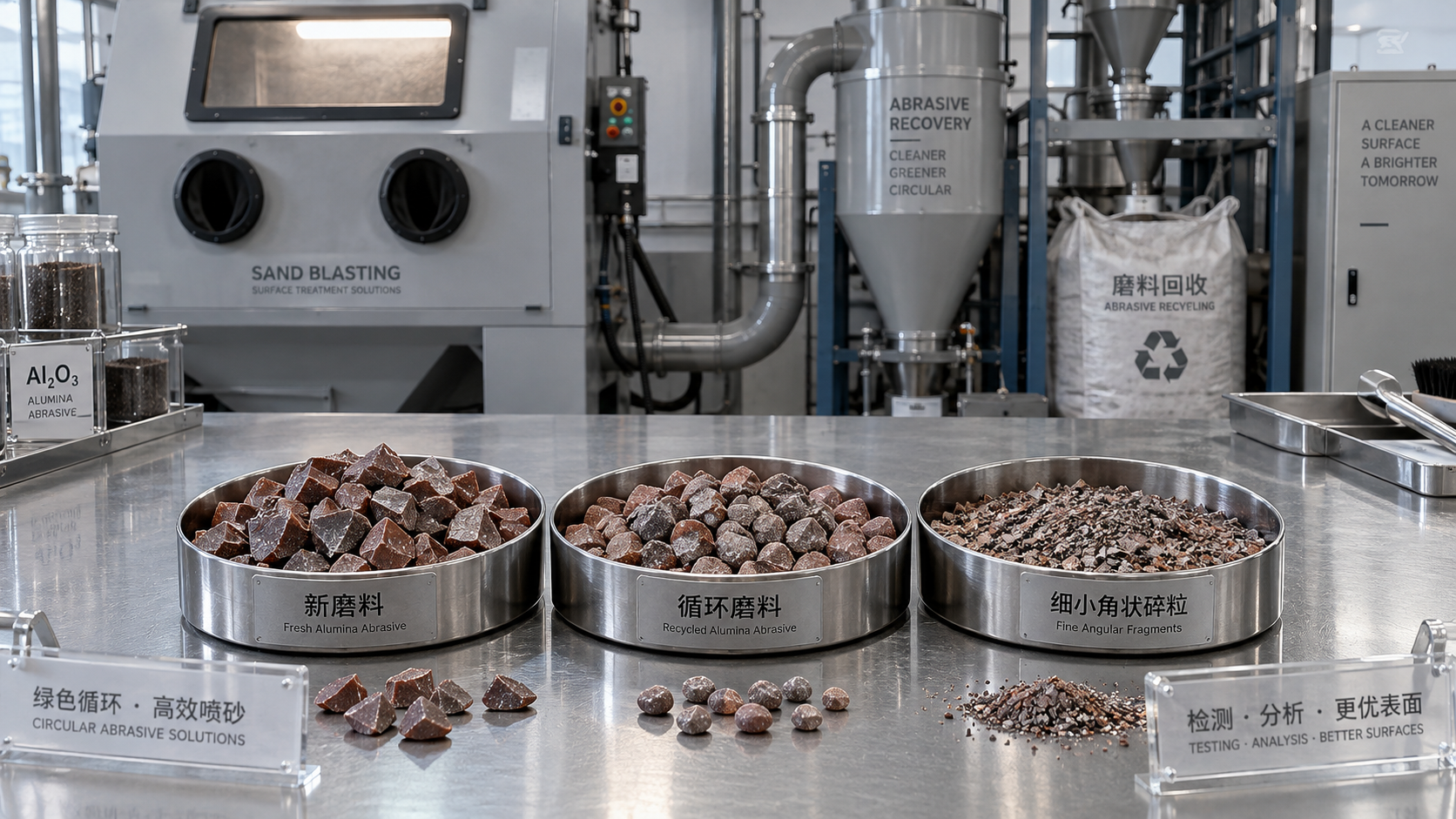
In a recirculating system, the abrasive charge changes as particles fracture, fines are removed, and fresh material is added. The working mix can therefore behave differently from the new material originally poured into the machine. A fresh-media trial may not represent an established production charge.
Finer breakdown products can alter cleaning speed, dust generation, and surface texture. Poor separation may retain excessive fines or debris, while inconsistent replenishment can shift the size distribution. Monitor the working mix and profile together. Adding fresh coarse abrasive without checking the reclaimed material can produce another uncontrolled change.
When a previously accepted process starts giving inconsistent results, check the media condition, separator performance, nozzle wear, pressure, and feed before changing the specified grit. Also inspect for contamination introduced through recycling. Dust extraction and appropriate operator protection remain necessary throughout blasting, including when using abrasive that contains no intentionally added silica sand.
The production choice should be documented as an abrasive grade plus a working process: substrate condition, accepted cleanliness and profile, blasting settings, and inspection method. That record gives the next operator something reproducible. Once the selected alumina grade consistently reaches those requirements without unacceptable damage or excessive dwell, keep the process stable and recheck it when the substrate, coating, equipment, or abrasive supply changes.