


News
Joining hands with partners at home and abroad to create long-term value and achieve a mutually beneficial future for the industry.
Send Us A Message
How to assess thermal shock resistant alumina for kiln linings
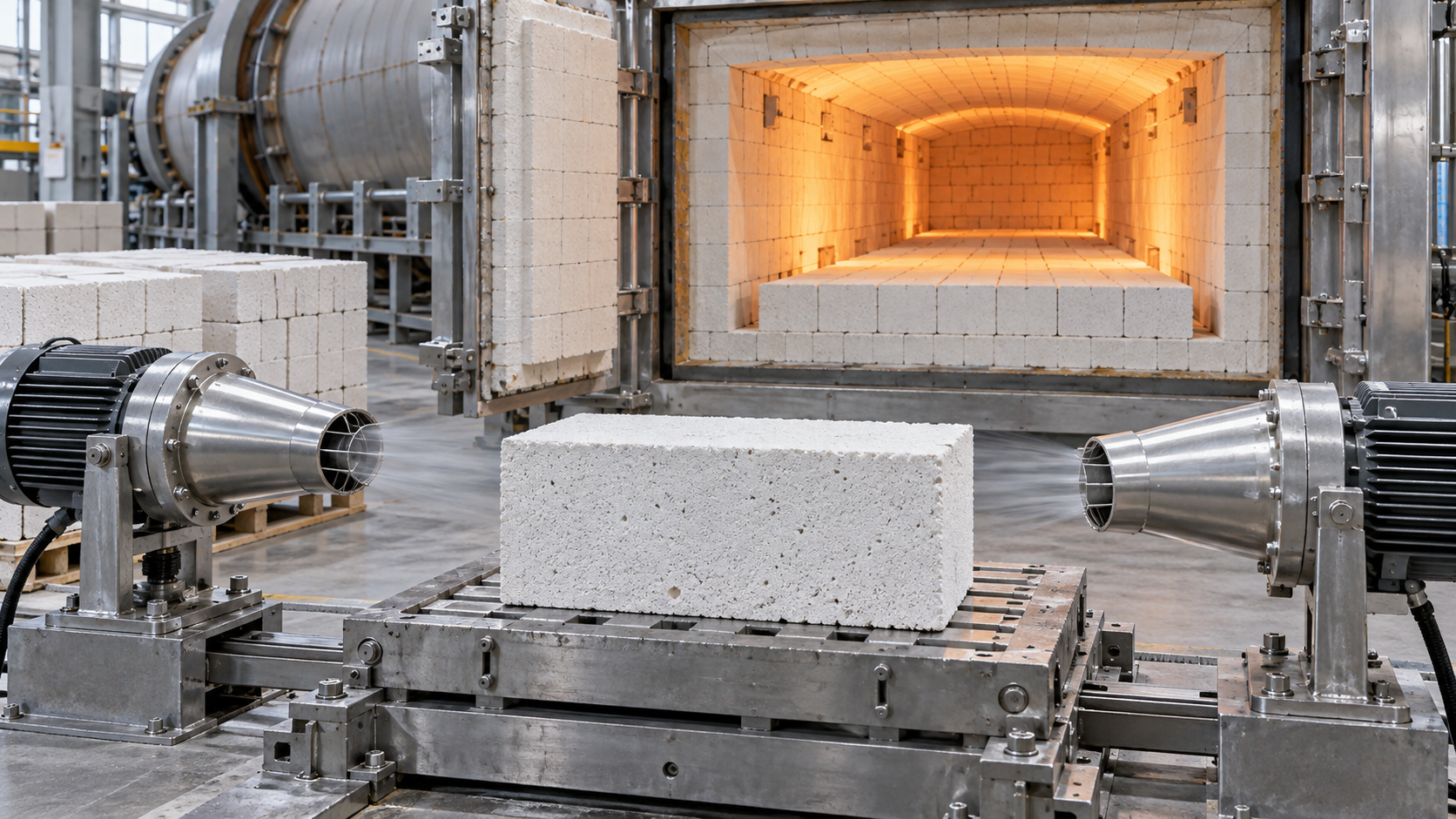
Select Thermal Shock Resistant Alumina for kiln linings by comparing the finished refractory’s response to representative heating and cooling cycles. A credible assessment connects the operating temperature profile, lining construction, and chemical exposure with measured cracking, spalling, and retained strength. Alumina purity and maximum service temperature help establish suitability, but neither establishes resistance to repeated thermal shock.
The first distinction is between alumina aggregate and the lining made from it. Grain chemistry, particle size distribution, and grain structure influence performance, while the binder, matrix, porosity, firing history, and installation determine how those grains behave together. A thermal shock claim for loose aggregate therefore needs separate validation in the proposed brick or castable formulation.
Define the thermal event the lining must survive
Peak kiln temperature alone gives an incomplete description of the duty. Thermal stress develops when different parts of the lining expand or contract by different amounts. Rapid surface cooling can create a steep temperature gradient while the interior remains hot; localized burner heating creates a different gradient. The relevant exposure is the temperature difference through the lining and how quickly it develops.
Describe normal operation alongside startup, planned shutdown, and credible process interruptions. Record heating and cooling rates where available, the frequency of cycling, and whether cooling occurs through air movement, cold feed contact, or another mechanism. A continuously operated kiln with occasional shutdowns presents a different qualification problem from a batch kiln that cools after every production run.
Geometry also changes the assessment. Thick lining sections retain heat longer, while corners, openings, and changes in section thickness produce uneven temperature fields. Anchors and adjoining materials introduce restraint. A small laboratory specimen can cool almost uniformly under conditions that leave a full lining with a substantial temperature difference between its hot face and interior.
Use this operating description to establish acceptance criteria before comparing grades. Relevant criteria include allowable surface loss, residual strength, dimensional stability, and whether cracks remain stable through repeated cycles. A cycle count without a defined failure condition is insufficient for selection.
Read material properties as a connected system
Thermal shock resistance reflects a balance among thermal expansion, stiffness, strength, heat transfer, and resistance to crack growth. No single property captures that balance across every kiln condition.
For a simplified restrained material, thermal stress increases with elastic modulus, thermal expansion, and temperature difference. This relationship explains why a dense, strong refractory can still crack during abrupt cooling. Its stiffness generates substantial stress before its initial strength becomes useful.
Controlled microcracking can reduce effective stiffness and dissipate energy, but excessive microcracking compromises load capacity and erosion resistance. The useful question is whether the crack network stabilizes. Continued loss of strength or increasing crack depth over successive cycles indicates accumulating damage.
Request property values with their measurement temperature and specimen condition. Room-temperature strength after drying, strength after firing, and strength at service temperature describe different states. Likewise, a single thermal expansion value can conceal changes over the operating range or irreversible dimensional changes during the first firing.
Assess the alumina grain within the proposed formulation
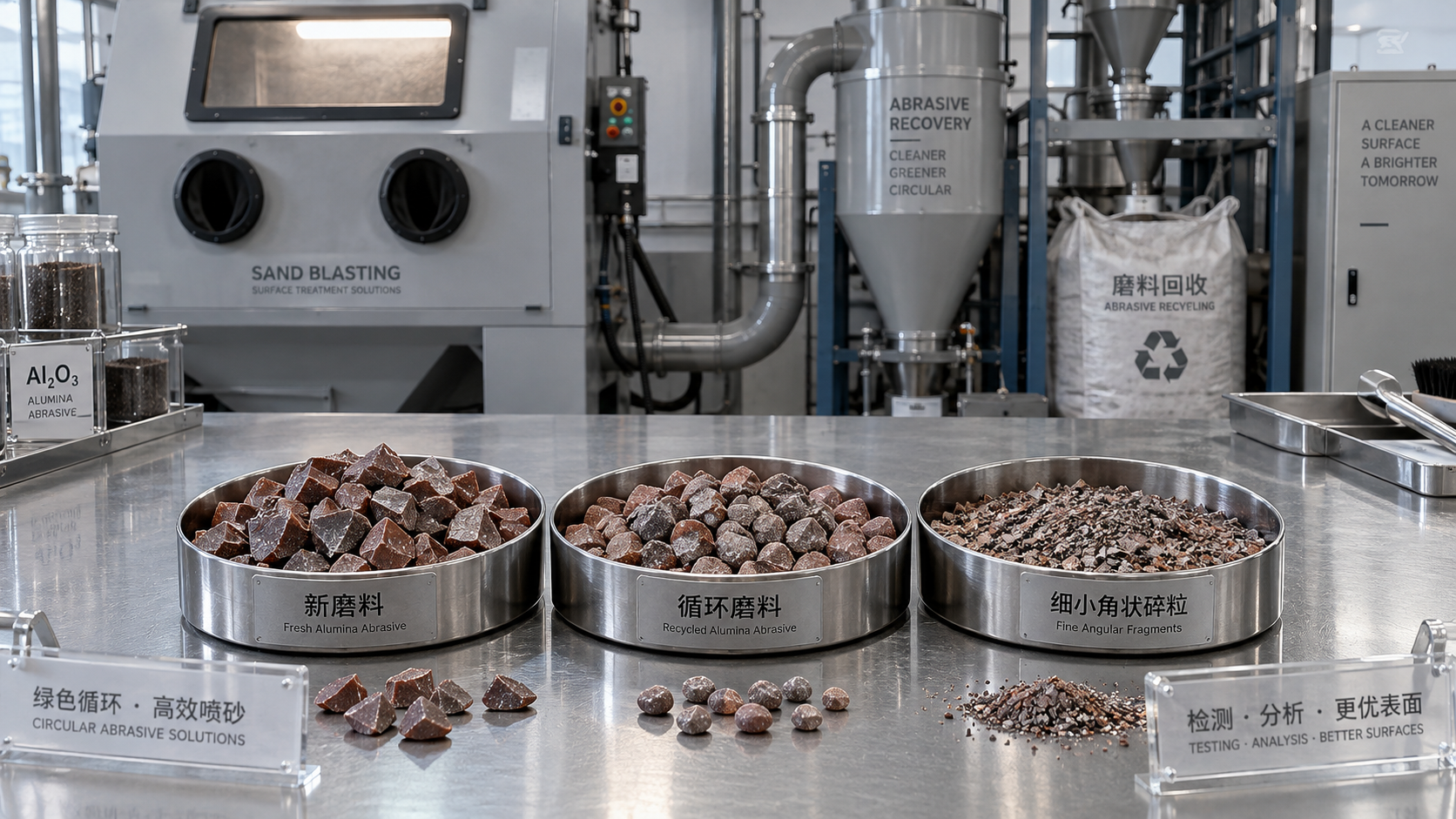
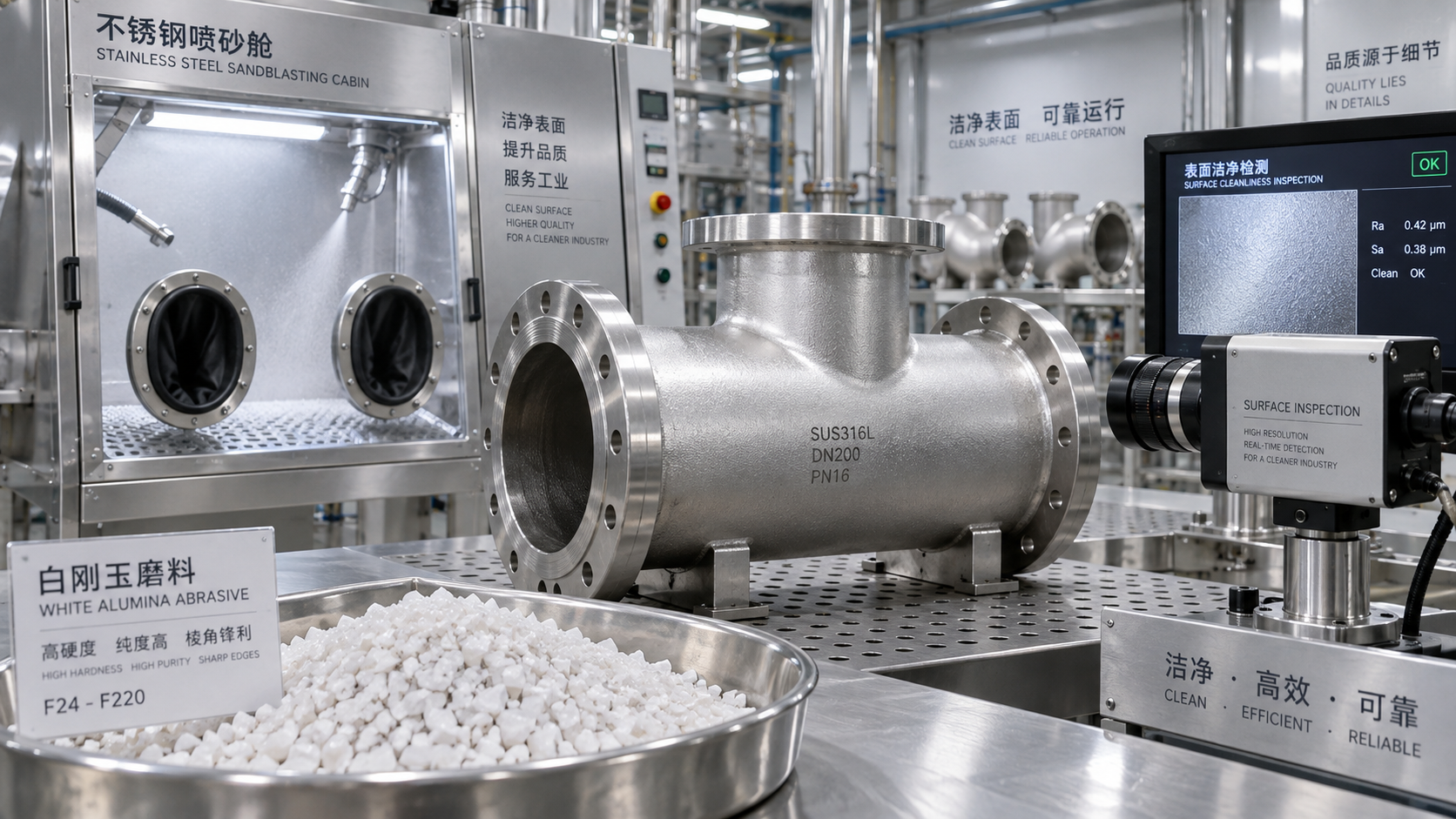
White fused alumina, brown fused alumina, and sintered alumina aggregates differ in chemistry, grain structure, and impurity profile. Their names alone do not establish a reliable thermal shock ranking. The consequences of these differences emerge through the matrix composition, particle grading, service atmosphere, and firing conditions.
Bulk alumina content is useful for screening chemical suitability, but minor constituents deserve attention. Alkalis and other impurities can contribute to phases that soften or react under particular operating conditions. Two aggregates with similar alumina content can produce different fired structures when combined with the same binder.
Particle size distribution affects packing, water demand, matrix volume, and the paths available for crack propagation. Coarse grains can deflect cracks in a suitable structure; poor bonding around those grains creates weak interfaces instead. Excess fines increase surface area and can raise water demand unless the formulation compensates through its dispersant and binder system.
Grain shape and internal grain porosity also matter. Compare actual sieve distributions and relevant physical properties rather than nominal mesh labels alone. For a castable, evaluate the selected aggregate with the intended cement or other bond, fines, additives, and mixing procedure. An aggregate substitution can change working consistency and installed density even when its chemical analysis appears acceptable.
For fired brick, the firing schedule determines bonding and phase development. For monolithic linings, drying and initial heat treatment create the structure that subsequently faces thermal cycling. Comparisons become misleading when one candidate is tested after adequate heat treatment and another retains moisture or has an incompletely developed bond.
Require a thermal cycling test that supports the intended decision
A useful report describes the complete test sequence: specimen dimensions, preparation, heat treatment, heating rate, peak temperature, soak duration, cooling method, minimum temperature, and number of cycles. It also states whether specimens were cycled as whole pieces or exposed selectively on one face.
The cooling method strongly affects severity. Water quenching produces rapid surface cooling and introduces contact with water, while forced-air cooling produces a different heat-transfer condition. Water quench results are useful for comparisons within a defined method, but their ranking should not automatically be transferred to a kiln that cools through gas circulation or process shutdown.
Laboratory comparisons require identical specimen preparation and exposure conditions. A longer soak changes temperature uniformity; specimen size changes the thermal gradient; surface finish can influence crack initiation. Results from separate reports should only be ranked after these differences have been resolved.
Measure more than visible survival. Retained flexural strength, mass loss, crack distribution, and dimensional change reveal different aspects of damage. Dynamic elastic modulus is also useful for following internal damage that is not yet obvious at the surface. Use uncycled reference specimens from the same preparation batch to separate cycling damage from initial manufacturing variability.
Retained strength is the post-cycle strength divided by the corresponding uncycled strength. Report both the ratio and the absolute values. A weak material can retain a large fraction of its original strength and still fall below the structural requirement. Conversely, a stronger material with a lower retention ratio may retain adequate strength, although continued degradation would still require investigation.
Include replicate specimens and report the spread of results. Refractory fracture is sensitive to local defects, so a single surviving sample offers limited evidence. Track damage at several stages of cycling when possible: an early drop followed by stabilization has a different implication from a steady decline toward failure.
Separate thermal damage from chemical and installation effects
Cracks and surface loss do not always identify thermal shock as the primary cause. Chemical attack can weaken the matrix, create reaction products, or change local expansion behavior. Thermal cycling then removes the damaged layer. In this situation, improving thermal properties alone leaves the initiating mechanism unresolved.
Evaluate contact with the actual feed, ash, deposits, gases, and any liquid phases expected at the hot face. Alkali-bearing deposits and reactive slags require attention even when the refractory has high alumina content. Where penetration is significant, examine the depth of infiltration and the condition of the aggregate–matrix interfaces after exposure.
For mixed chemical and thermal duty, combine representative chemical exposure with subsequent cycling, or use a test that includes both mechanisms. Clean laboratory specimens can overstate performance if service deposits infiltrate pores and create a mechanically different surface layer.
The observed failure pattern provides clues, although it rarely proves the cause by itself. Cracking immediately after a rapid temperature change suggests thermal stress. Damage associated with chemically altered deposits points toward reaction or penetration. Early disruption during initial heating of a castable raises questions about moisture removal, permeability, and the dry-out schedule. Examination of a section through the damaged lining helps distinguish these mechanisms.
Translate specimen results into a lining specification
The installed lining introduces restraint that small specimens often lack. Expansion joints, shell movement, anchor layout, lining thickness, and transitions between materials determine whether thermal strain is accommodated or converted into stress. A refractory that performs well as a free specimen can fail when expansion gaps are inadequate or anchors restrict movement.
For castables, mixing water and placement conditions directly affect porosity and strength. Excess water leaves additional pores after drying; poor consolidation creates voids and local weakness. Qualification specimens should represent the intended installation method, including curing and dry-out. A carefully prepared laboratory sample does not establish performance for a lining installed with a substantially different water addition.
Brickwork requires equivalent attention to joint dimensions, mortar compatibility, and expansion allowance. Local restraint near burner blocks or openings deserves particular scrutiny because temperature changes and geometry interact there. Where laboratory rankings remain close, a representative lining panel or limited service trial offers stronger evidence than further comparison of aggregate certificates.
Make the acceptance decision traceable
A defensible specification identifies the complete refractory composition or controlled formulation, its preparation condition, and the test procedure used to establish performance. Supplier data should distinguish raw-material measurements from finished-product results and link qualification specimens to a defined production batch.
Reject claims such as “excellent thermal shock resistance” when they lack exposure conditions and a measurable endpoint. Also avoid a universal minimum cycle count: its meaning changes with temperature range, cooling intensity, specimen geometry, and failure definition. Set the required result against the proposed duty and, where available, compare candidates with a lining whose service behavior is already understood.
Approval should rest on adequate remaining strength, acceptable material loss, and stable damage under representative exposure. If chemical compatibility is established but thermal cycling evidence is incomplete, define a bounded qualification trial with inspection intervals and removal criteria. If the formulation, aggregate grading, or binder later changes, review whether the existing qualification still applies before extending approval to the revised lining.