


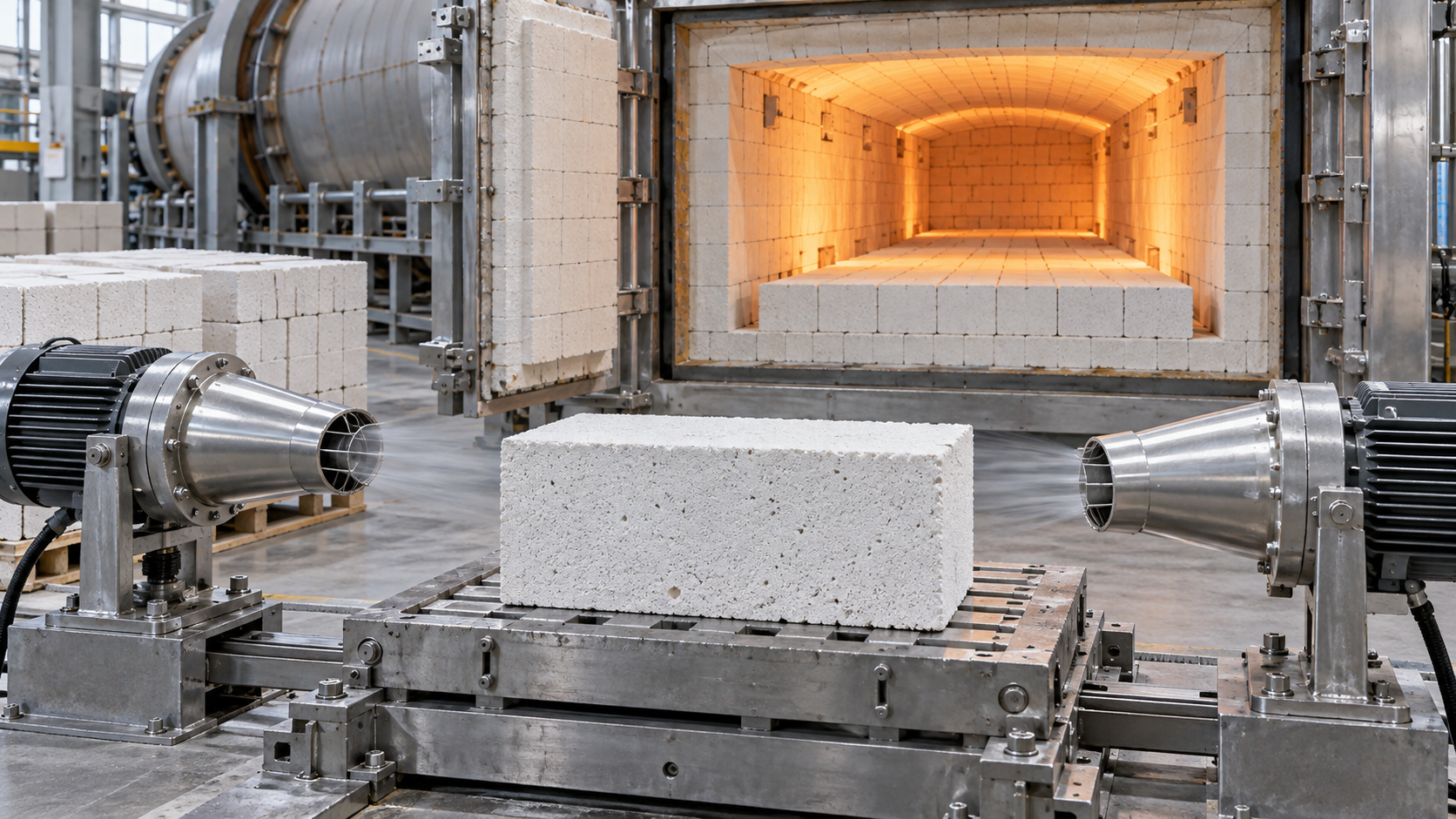
Porosity affects refractory alumina by changing heat transfer, load-bearing capacity, and access for corrosive substances. The best pore structure depends on the intended service conditions.
For chemical processing equipment and furnace linings, lower connected porosity generally improves resistance to infiltration. Higher porosity can improve insulation but usually reduces mechanical strength.
Technical evaluators should therefore assess pore size, connectivity, and distribution alongside total pore volume. Room-temperature porosity alone cannot establish whether a refractory will perform reliably.
The practical goal is to match the material to temperature, atmosphere, chemical exposure, loading, and cycling. These conditions determine which porosity trade-offs are acceptable.
Which porosity measurements actually matter?
Total porosity includes both open and closed pores. Open pores communicate with the exterior, while closed pores are isolated within the material under measurement conditions.
Apparent porosity generally measures liquid-accessible open pore volume using a specified test procedure. It does not describe all internal voids or directly measure gas permeability.
Two refractory alumina products can have similar apparent porosity yet behave differently. Their pores may differ substantially in size, tortuosity, connectivity, and spatial distribution.
A continuous pore network can provide pathways for gases, liquids, and reaction products. Isolated pores contribute to total porosity without providing equivalent access from the surface.
Fine pore throats may restrict flow while encouraging capillary uptake when a liquid wets the refractory. Penetration therefore depends on both pore structure and liquid properties.
Ask suppliers to identify the measurement method and specimen condition. Values measured after drying, firing, or service exposure may describe materially different structures within the refractory.
Does lower porosity always mean better high-temperature performance?
Lower porosity usually increases the solid cross-section available to carry load. It also tends to reduce pathways for chemical penetration when connected pores are eliminated.
However, a denser refractory generally conducts more heat than a comparable porous material. This can increase heat flow toward insulation layers, structural supports, or the shell.
Dense alumina is therefore often appropriate for exposed working linings facing abrasion, loading, or aggressive liquids. Porous alumina may suit insulation duties with limited chemical exposure.
These are application tendencies, not universal selection rules. Composition, bonding, microcracking, and operating conditions can outweigh differences in measured porosity when comparing actual products for service.
The decisive question is which failure mechanism limits service life. Optimizing porosity for insulation will not help if chemical infiltration destroys the lining first during operation.
How does porosity change thermal conductivity and energy use?
Pores interrupt solid conduction paths, so increasing porosity typically lowers effective thermal conductivity when composition and structure remain comparable. This supports the use of insulating refractories.
At elevated temperatures, radiative heat transfer across pores becomes more significant. Consequently, pore size and temperature influence insulation performance alongside the total volume of voids.
Larger pores can allow greater radiative transfer than finer pores under comparable conditions. A highly porous product is therefore not automatically the best high-temperature insulator.
Gas composition and pressure also affect heat transfer through pores. Conductivity data obtained in air may not adequately represent service under vacuum or another atmosphere.
Request thermal conductivity across the operating temperature range, rather than relying on one ambient value. Use those data in a calculation for the complete lining assembly.
The resulting evaluation should address shell temperature, heat loss, and temperature at layer interfaces. These outcomes matter more than selecting the material with the lowest density.
What does porosity mean for strength, creep, and deformation?
Pores reduce load-bearing area and create local stress concentrations. Increasing porosity generally lowers strength, although pore shape, size, and bonding strongly influence the magnitude of reduction.
Large irregular voids, cracks, and poorly bonded aggregate interfaces can be especially harmful. Average porosity may conceal these defects, making microstructural examination useful during technical qualification.
Cold crushing strength helps assess handling and installation durability. It cannot independently predict performance under sustained loading, steep temperature gradients, or prolonged exposure at operating temperature.
For loaded furnace components, request hot strength and creep information under relevant conditions. Refractoriness under load can provide additional evidence, depending on the component and specification.
Creep also depends on grain size, grain-boundary phases, impurities, and bonding. A dense product containing vulnerable intergranular phases may deform despite having relatively low apparent porosity.
Compare materials using the same temperature, stress, duration, and test method. Otherwise, apparently superior strength or deformation values may reflect testing differences rather than better performance.
Will more porosity improve resistance to thermal shock?
Thermal shock performance does not follow a simple porosity ranking. It depends on thermal expansion, elastic modulus, conductivity, strength, fracture behavior, geometry, and heating or cooling conditions.
Controlled porosity can reduce elastic stiffness and influence crack propagation. In some structures, this helps accommodate thermal strain or reduces damage from an individual temperature change.
However, greater porosity also commonly lowers strength and thermal conductivity. Reduced conductivity can intensify temperature gradients, while lower strength can make crack initiation easier during cycling.
The balance depends on whether the assessment concerns initial cracking, accumulated damage, or retained strength. A material may tolerate cracking while progressively losing useful mechanical capacity.
Request thermal cycling results that resemble actual service, including heating rate, cooling method, and dwell time. Water-quench rankings may not represent slow industrial furnace cycling.
Also examine joint design, restraint, and lining thickness. Even a suitable refractory alumina grade can suffer thermal damage if installation prevents expansion or creates localized temperature gradients.
Why is connected porosity critical in corrosive environments?
Connected pores allow process liquids and gases to enter the refractory. Penetration can enlarge the reaction zone beyond the exposed surface and weaken internal bonds.
For wetting liquids, penetration depends on capillary forces, viscosity, pressure, exposure time, and pore geometry. Lower apparent porosity helps, but does not fully describe infiltration behavior.
Chemical compatibility remains essential. Alumina can react with certain slags, alkalis, and process constituents, so high alumina content alone does not guarantee resistance to every environment.
Reaction products may alter local volume, strength, and thermal expansion. During subsequent cycling, these changes can promote cracking, spalling, or progressive loss of lining material.
Low connected porosity is especially valuable where molten phases or condensates reach the working face. Gas-exposed applications also require evaluation of permeability and the relevant reactions.
Use corrosion testing with representative process media whenever possible. Assess penetration depth, reaction layers, cracking, and retained integrity rather than judging performance only by surface appearance.
How does the pore structure change during service?
Porosity measured before installation is a starting condition. High-temperature exposure can change the structure through sintering, grain growth, phase reactions, cracking, and deposition from process media.
Sintering may reduce porosity and increase density, but it can also cause shrinkage. Excessive dimensional change can open joints or compromise contact between adjacent lining components.
Thermal cycling and chemical reactions may create new cracks and connected pathways. A material initially showing low apparent porosity can become more permeable during service.
In castables, water removal and binder transformations affect the developing pore network. Mixing water, curing, and dryout must therefore be considered when interpreting laboratory measurements.
Specify the firing or conditioning temperature for reported properties. Where practical, compare dimensional change, porosity, and strength before and after representative heat treatment or cycling.
How should evaluators specify porosity for different applications?
Begin with the exposure profile: maximum and normal temperatures, contact media, mechanical loading, abrasion, pressure, and shutdown frequency. Then identify the most probable failure mechanism.
For a chemically exposed working lining, prioritize compatible chemistry, limited connected porosity, and demonstrated corrosion resistance. Strength and dimensional stability must remain adequate throughout service.
For backup insulation, prioritize conductivity at temperature and acceptable shrinkage. Check that the material can withstand installation loads and any credible exposure through working-lining defects.
For load-bearing components, evaluate hot strength, creep, and bonding chemistry alongside porosity. For frequently cycled equipment, place greater emphasis on representative cycling and retained performance.
Avoid prescribing one universal porosity limit for every alumina refractory. Establish an acceptance range from application requirements, comparable test data, and experience with similar service conditions.
What should you request from a refractory alumina supplier?
Request apparent porosity, bulk density, chemical composition, and the relevant strength data, with test methods identified. Include specimen preparation and firing conditions in the technical comparison.
Where infiltration governs failure, add permeability or pore characterization and representative corrosion results. Where energy performance governs selection, request conductivity data at the expected operating temperatures.
Distinguish raw aggregate properties from finished refractory properties. Dense fused alumina grains do not guarantee a dense lining because packing, matrix composition, and processing introduce additional voids.
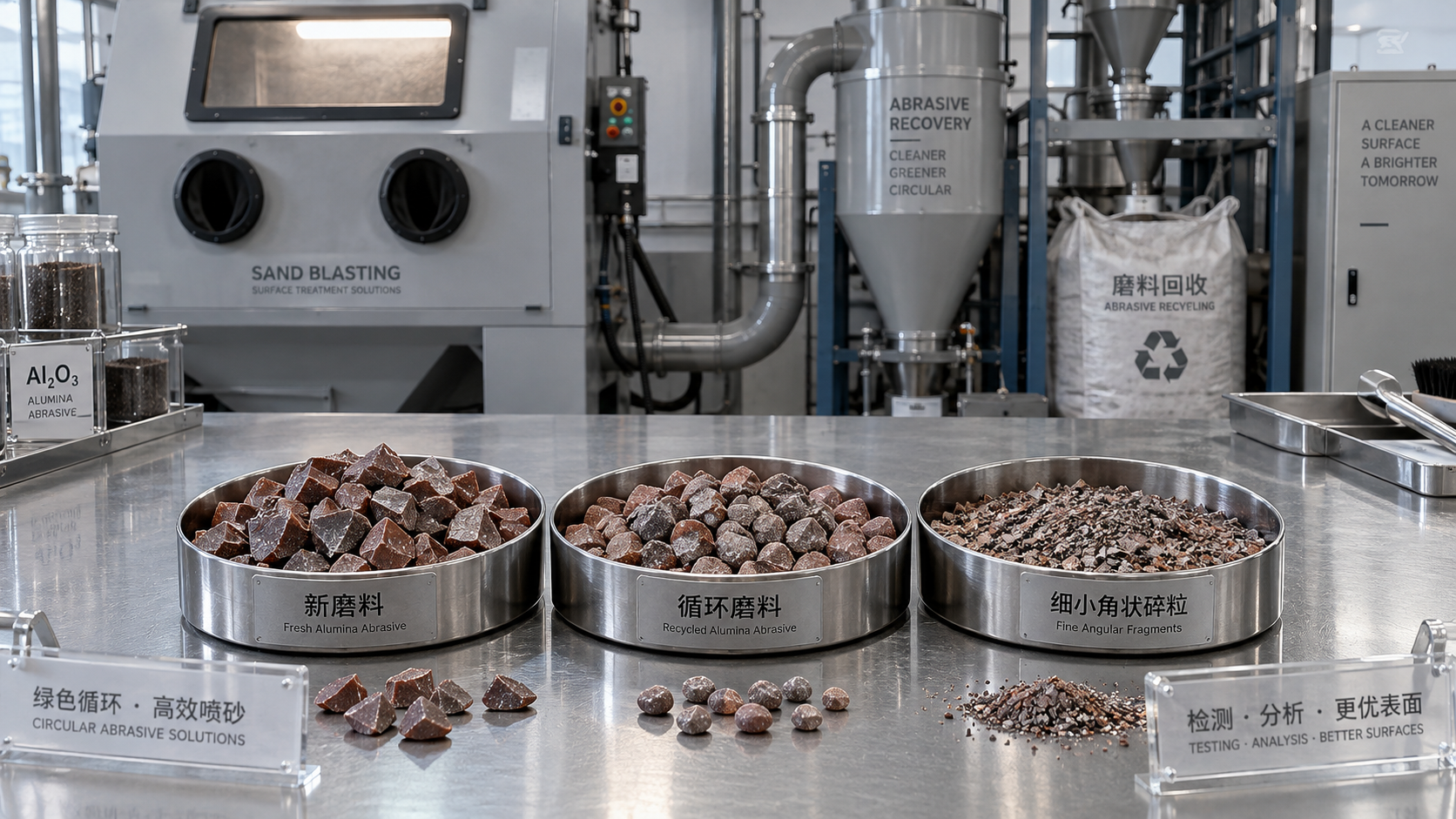
For fused alumina raw materials, evaluate particle size distribution, fines, grain chemistry, and consistency between batches. These factors influence packing, water demand, bonding, and final porosity.
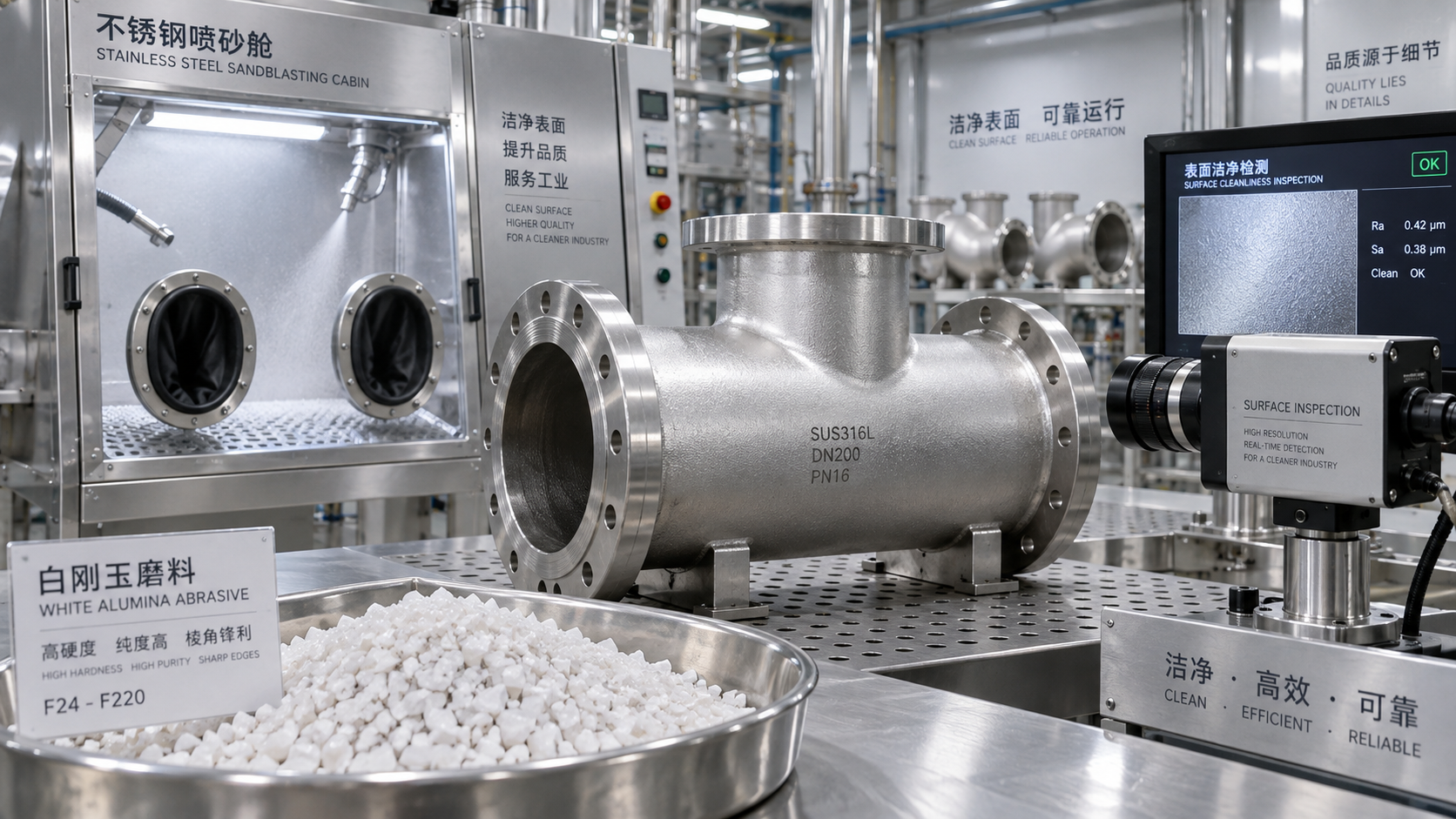
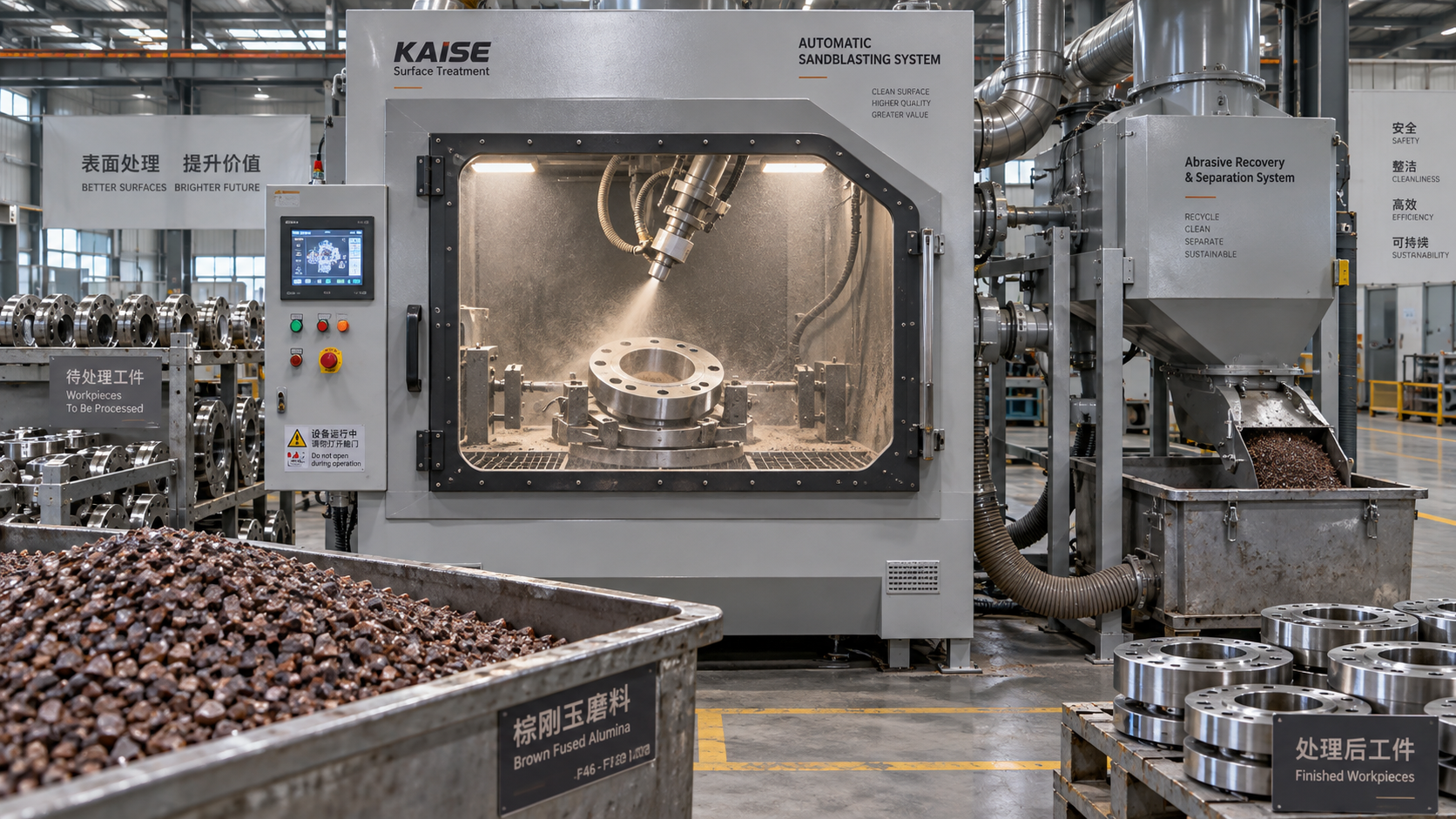
Shandong Tonghan New Materials Co., Ltd. supplies white fused alumina, brown fused alumina, and alumina products. Technical discussions should connect each grade to the intended refractory formulation.
Ask for grade-specific documentation and clarify whether reported values concern individual grains or a manufactured refractory. Verify finished-lining performance through formulation testing and appropriate qualification trials.
Make the selection around the dominant service risk
Porosity is a design variable, not an isolated quality score. Its value lies in how it affects heat flow, structural reliability, and chemical access during service.
Choose lower connected porosity when infiltration and mechanical damage dominate. Consider controlled higher porosity when insulation is essential and exposure conditions permit the associated strength trade-offs.
The strongest assessment combines pore measurements with chemistry, hot properties, thermal conductivity, and representative exposure testing. This provides a defensible basis for selecting refractory alumina.
Before approval, confirm that supplier data describe the relevant material condition and application. A suitable pore structure must remain effective after installation, heating, and repeated operation.